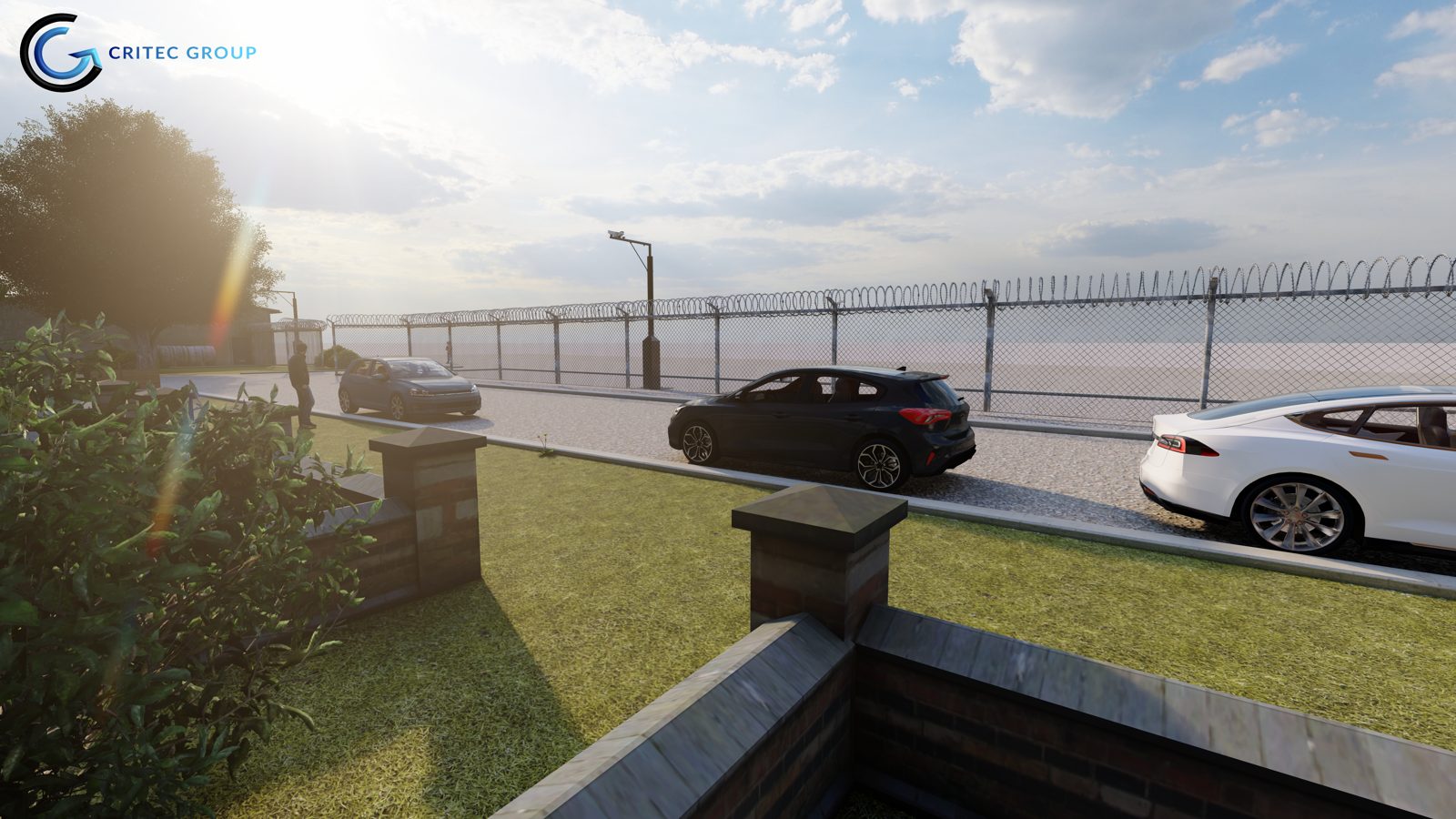
Why model it.
Security hardening is still too often drawn flat in 2D and tracked in a spreadsheet. Here is what that quietly costs — and what the published numbers say you get back by designing it in one coordinated model.
Three things go wrong with the 2D way.
Security comes last
It's designed in 2D after the building is set — making it the system most likely to clash with ducts, pipework and structure.
Drawings drift apart
Every change has to be chased by hand across plans, sections and the asset spreadsheet. Something always gets missed.
Problems surface on site
Conflicts are found when engineers are already installing — the most expensive place, and the worst time, to fix anything.
One model is the source. Everything else is an output.
In a coordinated twin the model is the single source of truth. Drawings, schedules, sections, datasheets and quantities are all generated from it — change the source once and every output updates with it. No more reconciling a plan against a section against a spreadsheet that has quietly drifted.
The later it's caught, the more it costs.
The single strongest reason to design security in a model rather than on paper: a clash fixed inside the model costs a fraction of the same fix once crews are on site.
In the model · Design stage
Caught and resolved before a drawing is issued.
Construction docs · Drawings issued
Now it ripples across every affected drawing and schedule.
On site · Installation
The most expensive place, and the worst time, to fix anything.
Source: BIM clash-detection cost studies.
What the numbers show.
Independent industry and UK government data on moving from a 2D-and-spreadsheets workflow to coordinated BIM.
- 15–20%
reduction in capital cost
UK Government Construction Strategy
- 30–50%
less rework on site
where BIM coordination is fully applied
- 8.5×
return on every £1 spent
on BIM coordination, vs field-rework cost
- 80%
faster quantity take-off
vs measuring from 2D drawings by hand
Sources: UK Government Construction Strategy; Journal of Construction Engineering & Management (2019); Construction Industry Institute (2022); industry BIM quantity take-off data.
What it adds up to.
Apply the published ratios to a typical £10M scheme and the indicative saving runs well into six figures — against a BIM uplift cost that is a small fraction of it.
Illustrative worked example — published BIM ratios applied to a £10M project.
indicative saving on a £10M project
One model keeps paying back, dimension by dimension.
Programme
Sequence the install against time to plan logistics and design out risk before crews mobilise.
Cost
Quantities and costs read straight from the model, so the commercial picture stays tied to the design.
Sustainability
Energy and whole-life analysis carried on the same model that drives the build.
Facilities
The twin carries into operation — asset data, testing and future upgrades, long after handover.
Coordinated information is safer information.
When survey, design, programme and cost are coordinated in one model, risk is designed out in the office instead of discovered on site — supporting a Zero Harm, right-first-time install.
Built once as a reusable Critec asset.
Security elements are modelled as parametric families — one flexible object flexes to every fence, post, gate, bollard and rated barrier — with compliance data carried inside the geometry. Built to ISO 19650-aligned naming and LOD conventions, they redeploy across an operator's whole estate, so the modelling cost amortises fast.
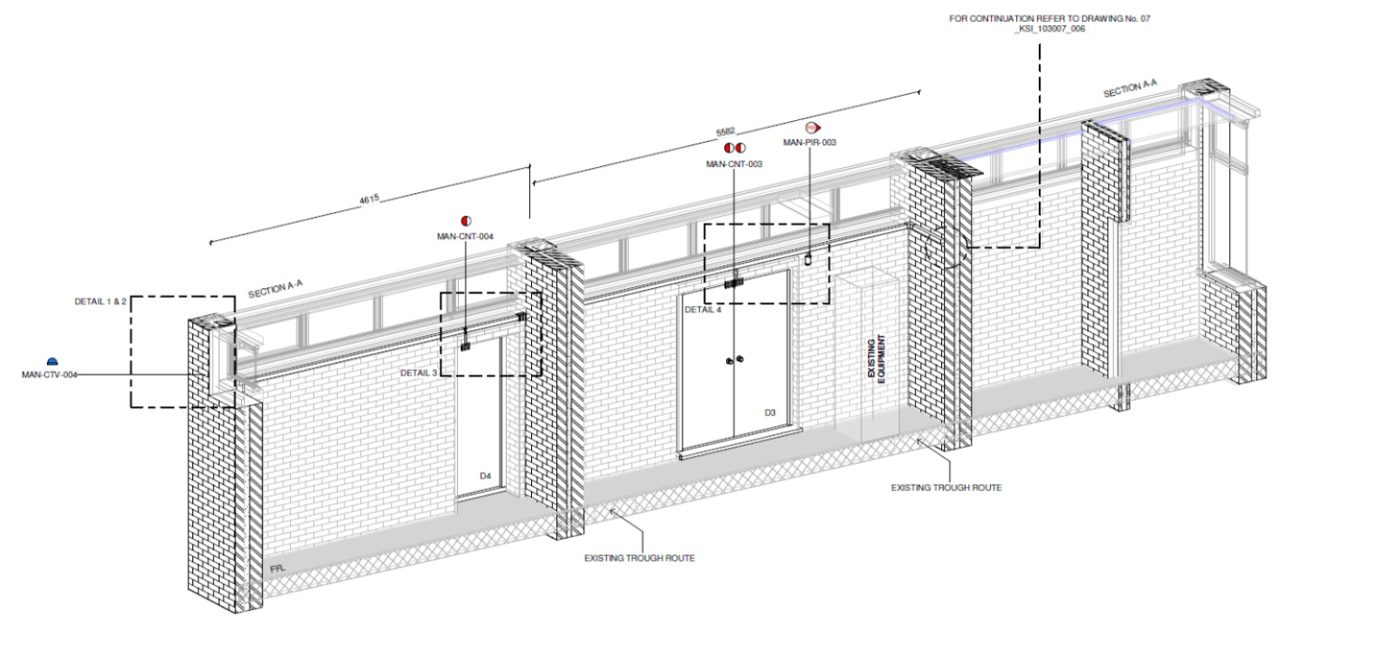
Parametric consistency
One family flexes height, mesh, post centres and rating across every security zone — no copy-and-forget errors.
Embedded compliance
PAS 68 / IWA 14 impact ratings, certification refs, detection technology and IP ratings carried inside the model — and straight into the schedules.
Coordination built in
Correct 3D extents catch clashes early — bollard foundations vs services, gate swings vs vehicle tracking, sightlines vs detection zones.
Reusable across the estate
ISO 19650-aligned families redeploy across sites and future commissions — the build cost amortises across the programme.